
What is Silage?
 |
| Silage Pit equipped with Tarp |
How to make Silage?
 Silage must be made from plant material that is high in moisture content, this content can go up or down depending on the storage area of the silage and the amount of water that will be lost in storage. For corn silage, harvest begins when the whole plant moisture is at a suitable level. For pasture crops, the silage grass is mowed and allowed to wilt for a day until the moisture content drops to a suitable level. The plant material is then collected, chopped into small pieces, usually 1.3 cm in length, and packed. Current technology of silaging uses mechanical forage harvesters that collect and chop the plant material, and deposit it in trucks or wagons. these forage harvesters are often pulled behind a tractor. Harvesters blow the silage into the wagon, driven beside the tractor, via a chute at the side or rear of the machine. Once the silage is cut, a fermenting process must take place, and then the silage is packed into one of the three storage areas. On our farm, we use a silage pit. Since we don't own a mechanical forage harvester, our farm hires a custom silaging company to cut and forage the silage crop. My grandpa and dad then use tractors to dig a hole into the soil, usually in a moist field, and then begin to construct the pit. Once all of the silage is piled into the pit, large tractors are driven over top of the silage, in order to pack and seal the silage. This prevents oxygen from getting into the silage, and keeps nutrition value. Once packed down, a large, thick tarp is placed and pulled tightly over top of the pile to keep the silage sealed and fresh. Once winter come's, our beef cattle need the silage as a form of food, so each morning my grandpa uses a tractor with a silage wagon attached to the back of it and pulls it through the field with the cattle. The silage wagon delivers a long stream of silage across the pasture, and the cows line up to eat!
  |
| Tractor packing down the silage pit! |
How does a farmer store Silage?
 Silage must be firmly packed to minimize the oxygen content, or it will spoil. The idea behind silage is to keep it as moist as possible, this allowing the best yield of the crop and the highest nutrition value for livestock which will eat the crop. Many farmers store their silage produce in silo's, which are large metal bins, sealed completely to avoid any contact with oxygen from the outside. In a silo, silage must be firmly packed in order to minimize the oxygen content, or it will spoil. Here are four major steps in which silage goes through as it is entered into the silo:
 - Presealing: which enables dry matter loss, keeping the silage full of moisture
-Fermentation: which occurs over a few weeks, and ensures that no oxygen is circulating through the silage crop
-Infiltration: which enables some oxygen infiltration
-Emptying: Which exposes the surface of the silage, and a small amount of moisture is lost from the crop
Does Silage have good nutrition for livestock?
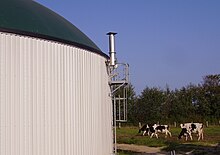 |
| Silage Silo for Dairy Cattle |
Silage retains a much larger portion of its nutrients from being kept with lots of moisture, as opposed to being a dried and kept crop, such as hay. The ensiling process of silaging preserves forages, but does not increase the nutrition value. Bulk silage is often fed to dairy
cattle, while baled silage tends to be used for beef cattle, sheep, and horses. These four types of livestock are all anaerobic digesters, meaning that the microorganisms living within the bodies of these animals break down biodegradable material in the absence of oxygen. Anaerobic digestion allows the livestock to gain energy and nutrition from the silage in a metabolic process.
Does Silage have a high nutrition value for livestock?
 |
| Dairy Cattle eating Silage from a Feeder |
Yes, silage has a very high nutrition value for livestock. However, only certain animals are able to eat livestock due to the need for anaerobic digestion. It is very important for livestock to receive as much nutrition as possible, and because silage is packed full of value, farmer's often use it as a source of winter feed. So there you have it! The reason why farmer's use silage as a form of feed for livestock, if you have any questions please feel free to ask!
-Jess

